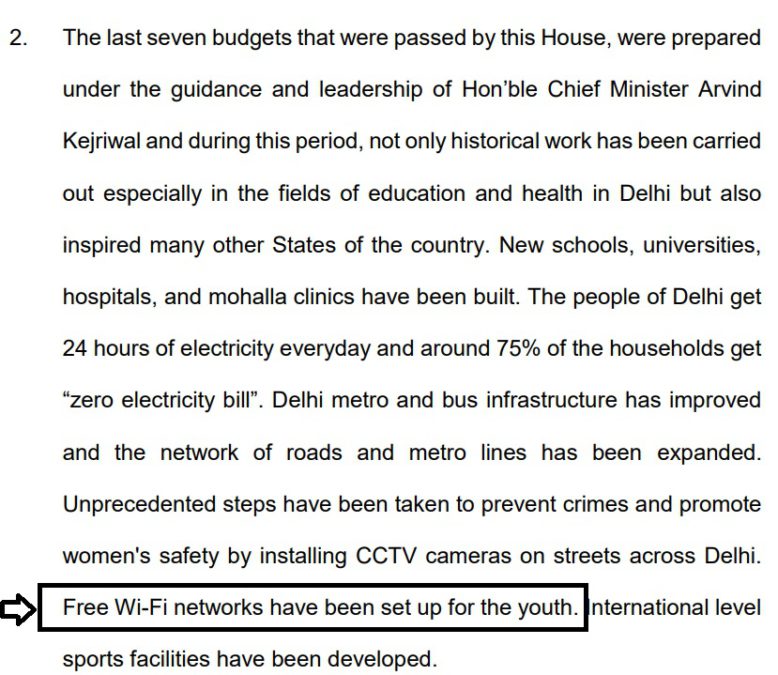
Delhi Free Wi-Fi Initiative 2026: The Delhi administration has launched a complimentary Wi-Fi service across various public locations in the capital city. Recognized as one of the world's most extensive public Wi-Fi deployments, the project involves installing 11,000 hotspots throughout Delhi. Following an initial rollout of 100 hotspots on December 16, 2019, to mark the program's official start, the government has introduced a dedicated mobile application for users to easily connect to the network.
The Delhi government is actively fulfilling its pledge to provide free internet access in public spaces. Residents can enjoy 15 GB of data every month via this widespread city network, a core commitment made by the AAP during the 2020 election cycle.
With a goal of establishing over 11,000 hotspots, the city ensures that users within a 100-meter range of these points can access the internet at no cost. Each individual receives a monthly allowance of 15 GB (capped at 1.5 GB daily) with speeds ranging from 100 to 200 Mbps under the 2026 scheme. To get online, users simply need to register and log in using their credentials.
CM Free Wi-Fi Initiative 2026 in Delhi
The Delhi cabinet has reaffirmed its commitment to the citywide free Wi-Fi project. Currently, the Aam Aadmi Party government has successfully deployed hotspots at 10,561 locations across the national capital. Delhi remains a global pioneer in providing free internet access on such a massive scale.
Delhi Cabinet’s Stance on the Wi-Fi Program
Following a successful first year, the Delhi cabinet approved the continued implementation of the free Wi-Fi project to ensure high-quality connectivity for residents. Officials noted that 10,561 hotspots are already active, making Delhi the first city globally to offer such comprehensive coverage. Chief Minister Arvind Kejriwal officially inaugurated the service at the ITO bus stop in December 2019.
The government aimed for 11,000 hotspots, of which 10,561 are currently operational. This includes 2,208 units at bus stops and 8,353 in other public areas, ensuring coverage every 500 meters. The infrastructure currently supports concurrent access for over 2.1 million citizens.