The central government has introduced the nationwide "One Nation One Ration Card" initiative, benefiting all Indian citizens, including low-income families and migrant laborers. This standardized online application process was developed by the central authorities to streamline the issuance of new ration cards. Furthermore, the government is implementing mandatory Aadhaar-Ration Card integration. Citizens can now access the online application guidelines linked with Aadhaar and view the list of states that have already adopted this program. Additionally, a comprehensive dashboard is available for public viewing on the official impds.nic.in portal.
One Nation One Ration Card Scheme 2026
The primary goal of the One Nation One Ration Card program is to bolster food security by granting beneficiaries the flexibility to collect their rations from any fair price shop nationwide. To support migrant workers, the government has launched this portability feature. By linking Aadhaar with ration cards, the system ensures that no eligible individual is denied subsidized food grains under the National Food Security Act, regardless of their location within the country.
Connecting ration cards to Aadhaar helps eliminate fraudulent claims and empowers beneficiaries to access their supplies from any PDS outlet across India. Currently, the program operates in 36 states and Union Territories under the Integrated Management of PDS (IMPDS). The government is also working toward establishing a real-time digital database of all ration cards, similar to the GSTIN framework.
One Nation One Ration Card Official Website
The official portal for this initiative is https://impds.nic.in/portal. Citizens can utilize the Integrated Management of Public Distribution System (IMPDS) website to access comprehensive details regarding the scheme. Below is a preview of the official portal's interface:
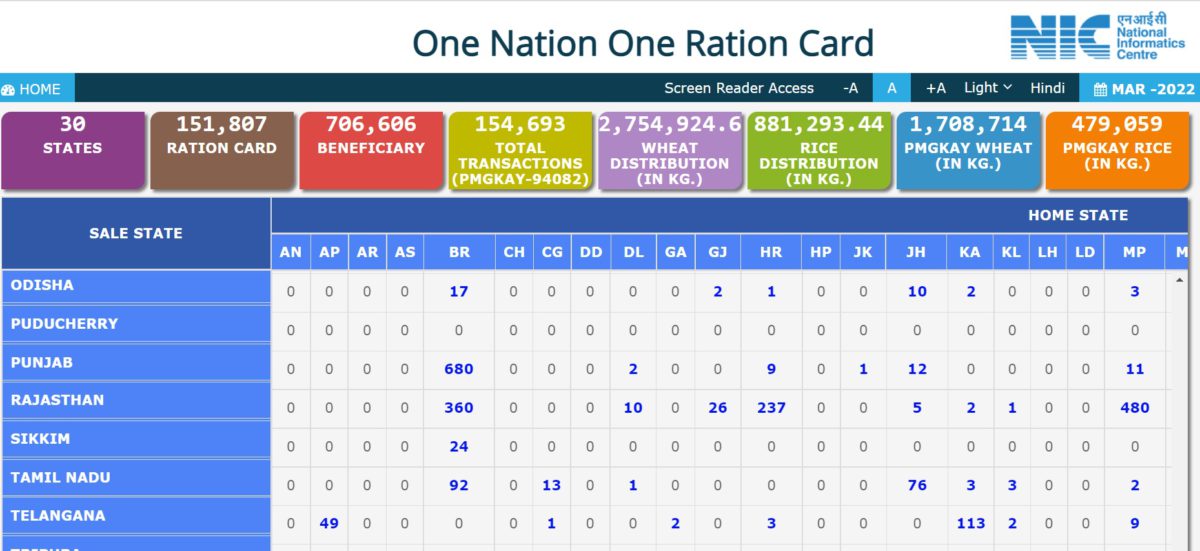
The ONORC program has been successfully implemented across 36 states and Union Territories, serving approximately 800 million beneficiaries.