The Gujarat government has launched the Saraswati Sadhana Yojana 2026 for female students. Under this initiative, all girls from the Scheduled Caste (SC) community enrolled in the 9th grade will receive complimentary bicycles. The Department of Social Justice & Empowerment serves as the primary agency responsible for the effective execution of this bicycle distribution program for SC girls across Gujarat.
The Saraswati Sadhana Yojana (SSY) in Gujarat is designed to boost school enrollment among girls aged 14 to 18 at the secondary and higher secondary levels. This program aims to lower dropout rates among girls from marginalized backgrounds. Below, we outline the significance, expected outcomes, and beneficiary criteria for the Saraswati Sadhana Yojana within Gujarat state.
Saraswati Sadhana Yojana in the 2023-24 Gujarat Budget
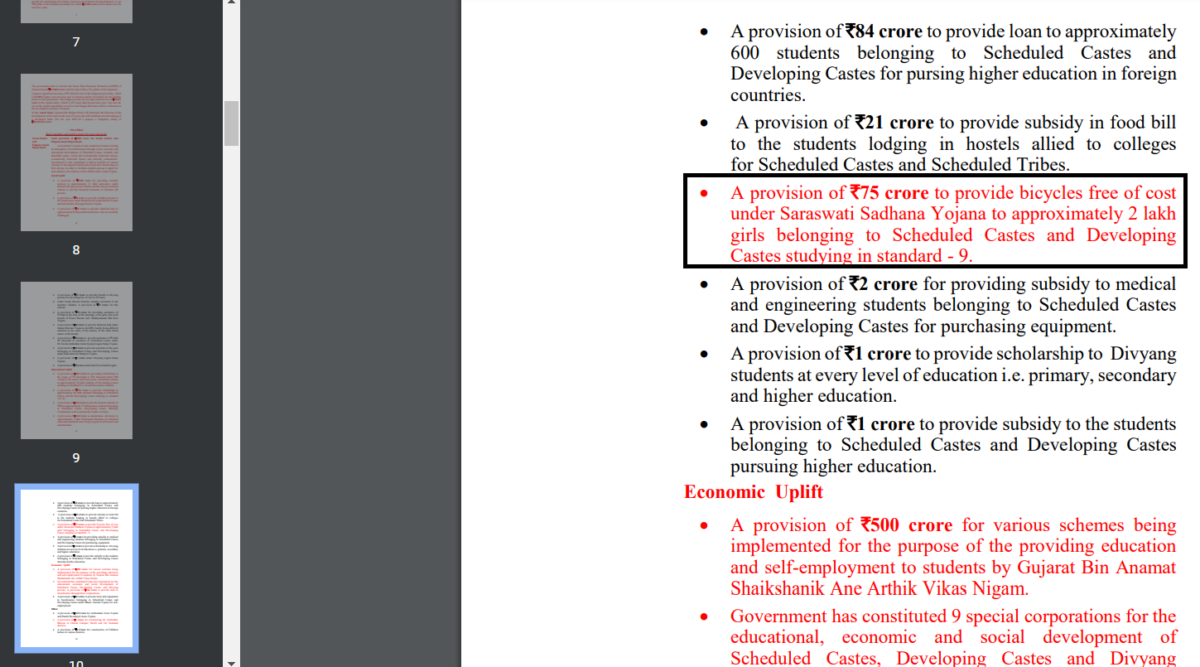
During the presentation of the 2023-24 state budget, the Finance Minister announced an allocation of Rs. 75 crore to provide free bicycles to approximately 2 lakh girls from Scheduled Castes and Developing Castes currently attending the 9th standard.
Gujarat Saraswati Sadhana Yojana 2026
Secondary schooling is a vital phase that builds the groundwork for higher academic and professional pursuits. Surveys indicate that many girls from underprivileged backgrounds discontinue their education due to a lack of necessary resources. To encourage SC community girls to continue their education, the Gujarat government has initiated the Saraswati Sadhana Yojana 2026, offering free bicycles to eligible students in Class 9 at government or government-aided schools.
Eligibility for Sarasvati Sadhana Yojana 2026
Eligibility is restricted to girls currently enrolled in the 9th grade. To qualify for the Sarasvati Sadhana Yojana, the annual family income of the SC student must not exceed Rs. 1,20,000 for rural residents and Rs. 1,50,000 for those in urban areas. Please note that applicants must meet both criteria to receive a free bicycle.
The Gujarat Sarasvati Sadhana Yojana aims to boost the gross enrollment ratio for grade IX students. By addressing issues related to accessibility and educational quality, this scheme promotes female education, ultimately improving both academic participation and the overall standard of learning for girls.